
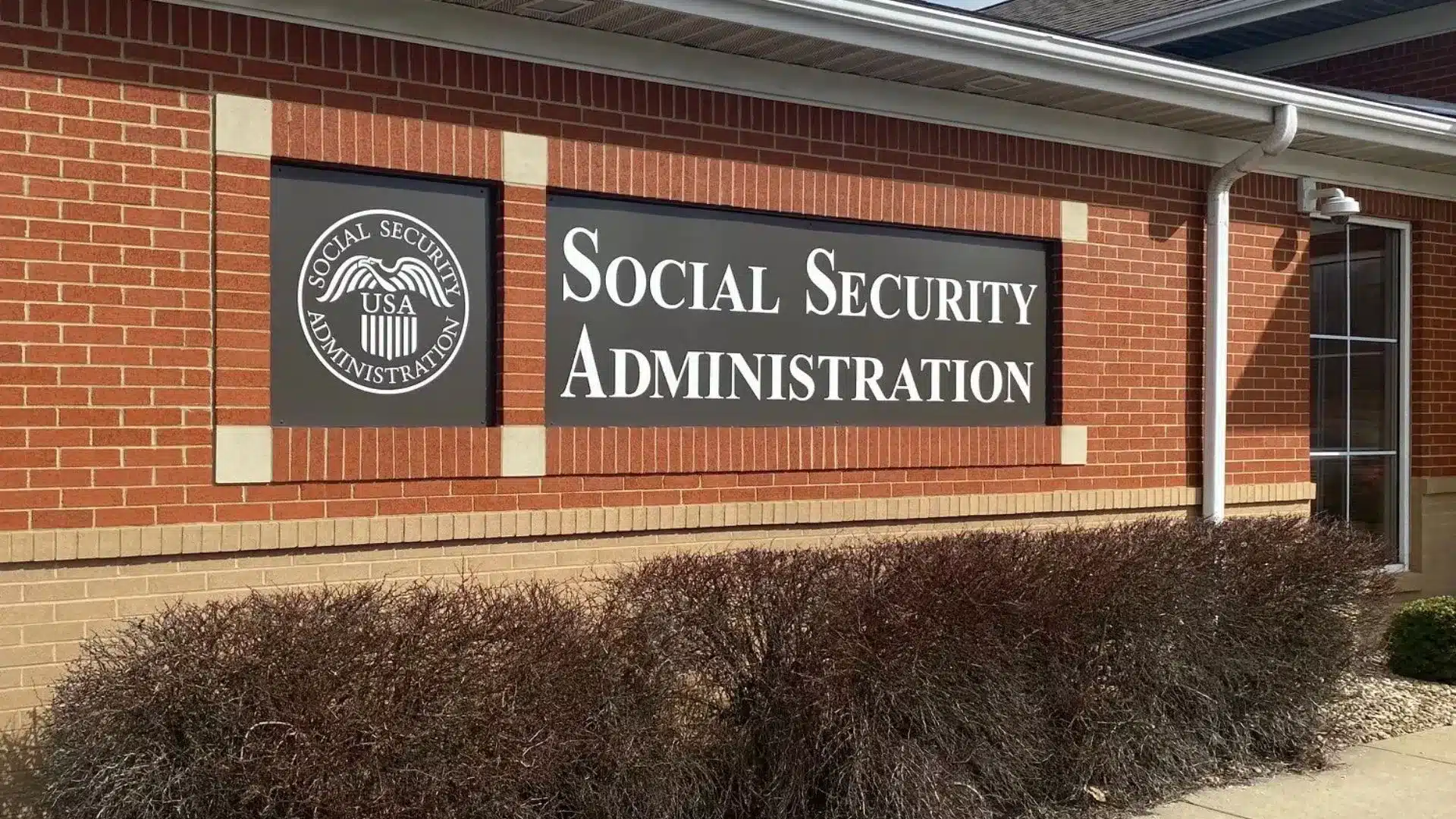
On the eve of yet another possible shutdown of the U.S. federal government, millions of Americans are beginning to wonder what will happen to their benefits—especially Social Security, on which more than 74 million people rely each month.

Despite the climate of political uncertainty, there’s a somewhat reassuring answer: retirement, survivor, and disability payments will continue, even if the government suspends part of its operations.
However, other essential services may be temporarily interrupted, revealing the vulnerability of a system that, while crucial, is not immune to the effects of budget instability.
Guaranteed Payments, but Limited Services
Social Security holds a unique position within the federal apparatus. Unlike other agencies, its funding does not depend on Congress’s annual budget negotiations. Its resources come from a permanent law—the Social Security Act—which guarantees automatic transfers through payroll taxes. These taxes are split between workers and employers and constitute the main fund responsible for maintaining the flow of benefits.
For that reason, monthly payments will not be interrupted during a shutdown. Deposits will continue to be made, as will the approval of retirement, disability, and survivor benefits. According to Tom Holland, the Social Security Administration’s Chief Financial Officer, “essential payment and direct public service activities will continue, ensuring that benefits are paid accurately and on time.”
However, as noted in the contingency document published by the agency itself, administrative and supplemental services may be affected. This includes benefit verifications, replacement of Medicare cards, corrections to earnings records, issuance of documents, and non-urgent account updates.
In practice, local offices will remain open, but with reduced staff and slower response times. Online and telephone requests will still be available, though subject to possible processing delays.
What Stays Active and What Might Stop
Even with guaranteed payments, the shutdown affects the agency’s operations on multiple levels. Frontline workers—those responsible for direct service and benefit processing—must continue working but will not be paid while the budget impasse lasts. This is standard procedure during federal shutdowns: “essential” employees keep working, accumulating pay that will only be released after a new budget is approved.
Among the areas expected to remain operational are:
- Processing new retirement, survivor, and disability claims
- Continuing monthly benefit payments
- Maintaining security and data systems
- Providing emergency assistance to beneficiaries in critical situations
Among the services that are likely to be suspended during the shutdown are:
- Requests for replacement Medicare cards
- Updates to information not related to payments
- Review of earnings and work history records
- Issuance of benefit statements and verifications
Although temporary, these limitations may cause significant delays if the political deadlock continues, creating a backlog of requests and longer average response times even after normal operations resume.
The Impact on COLA and the Risk of Delay
One of the most sensitive effects of a prolonged shutdown could be a delay in the annual Cost of Living Adjustment (COLA).
This adjustment, calculated based on the variation of the Consumer Price Index for Urban Wage Earners and Clerical Workers (CPI-W), is determined by the Bureau of Labor Statistics (BLS)—an agency also affected by any suspension of operations.
If the BLS cannot release inflation data on schedule, the COLA announcement could be delayed, impacting millions of beneficiaries waiting for the annual increase. Although the calculation and implementation occur later, any interruption in the Bureau’s work can postpone the adjustment.
The COLA is one of the most important mechanisms protecting retirees’ and disabled beneficiaries’ purchasing power. In a scenario of persistent inflation, even small delays can create insecurity and real financial impacts for families who depend solely on these benefits.
Federal Workers: Essential but Unpaid
During a shutdown, the roughly 40,000 Social Security Administration employees face a paradoxical reality. They are considered essential and must continue working, but they receive no pay until Congress and the Executive reach an agreement.
In 2023, the agency was already facing severe operational challenges, including a 12% loss of its workforce and a “morale crisis” documented by the Social Security Workers United union, which represents agency employees.
“Delaying our pay will only worsen the morale crisis,” the union said in a recent statement. “We are being asked to keep delivering benefits earned by American workers while our own financial situation deteriorates.”
This pressure—continuing to provide an essential service without guaranteed pay—reflects the structural fragility of a system that depends on political stability to function efficiently.
A Political Deadlock with Practical Consequences
Although Social Security payments are protected, the shutdown is only a symptom of a deeper issue: the political deadlock that increasingly paralyzes Washington.
Partisan disagreements over spending and tax cuts, which lead to budget blocks, have become more frequent, creating instability for federal agencies and insecurity for millions of citizens.
This time, the confrontation has become even more heated. In an internal message to employees on the eve of the shutdown, Social Security Commissioner Frank Bisignano stated that President Trump opposed the government closure, blaming Democrats for blocking funds. The explicitly political tone of his message reflects the level of tension and polarization that now reaches even traditionally nonpartisan institutions.
Meanwhile, economists warn that even a partial shutdown has cumulative effects. Agencies lose productivity, processes pile up, and when operations resume, the government faces a race against time to normalize services.
What Beneficiaries Should Do
For those who depend on Social Security, the guidance is clear: there’s no need to panic, but staying informed is essential.
Payments will continue to be made automatically, and beneficiaries do not need to take any additional action to ensure deposits.
However, experts recommend monitoring the agency’s official channels for updates on deadlines and temporarily suspended services.
For urgent requests—such as replacing lost cards, updating banking information, or clarifying payment issues—the best option is to use online services, which remain available despite operational limitations.
If the shutdown lasts, beneficiaries should expect longer wait times and larger queues.
Social Security as a Mirror of Institutional Fragility
Ultimately, the federal shutdown crisis exposes more than just budget flaws—it reveals the structural dependence of millions of Americans on a system that, while stable at its core, is vulnerable to political disruptions and administrative erosion.
While payments continue, the machinery that sustains Social Security—its workers, systems, and support services—operates under strain, without guaranteed continuity.
In a country where the aging population is rapidly growing and the future of Social Security is increasingly debated, each shutdown serves as an uncomfortable reminder: the stability of Social Security depends less on actuarial math and more on the political ability to keep the government running.
Conclusion
The government shutdown will not stop Social Security payments, but it will expose its weaknesses. The checks will keep coming, but the human and technical support behind them may falter.
For beneficiaries, the greatest risk is not an immediate loss of payment but the cumulative consequences—delays, reduced efficiency, and erosion of trust in one of the nation’s most vital institutions.
When the government stops, Social Security continues—but only because millions of workers keep going too, sustaining what, for many, is their only source of security in uncertain times.