
For decades, retirement in the United States was built on a relatively clear structure: workers contributed to Social Security, many companies offered private plans, and individuals supplemented their income with personal savings. But this architecture began to fragment. As traditional pension plans disappeared and many employers stopped offering retirement programs, millions of workers were left without access to simple long-term savings mechanisms.
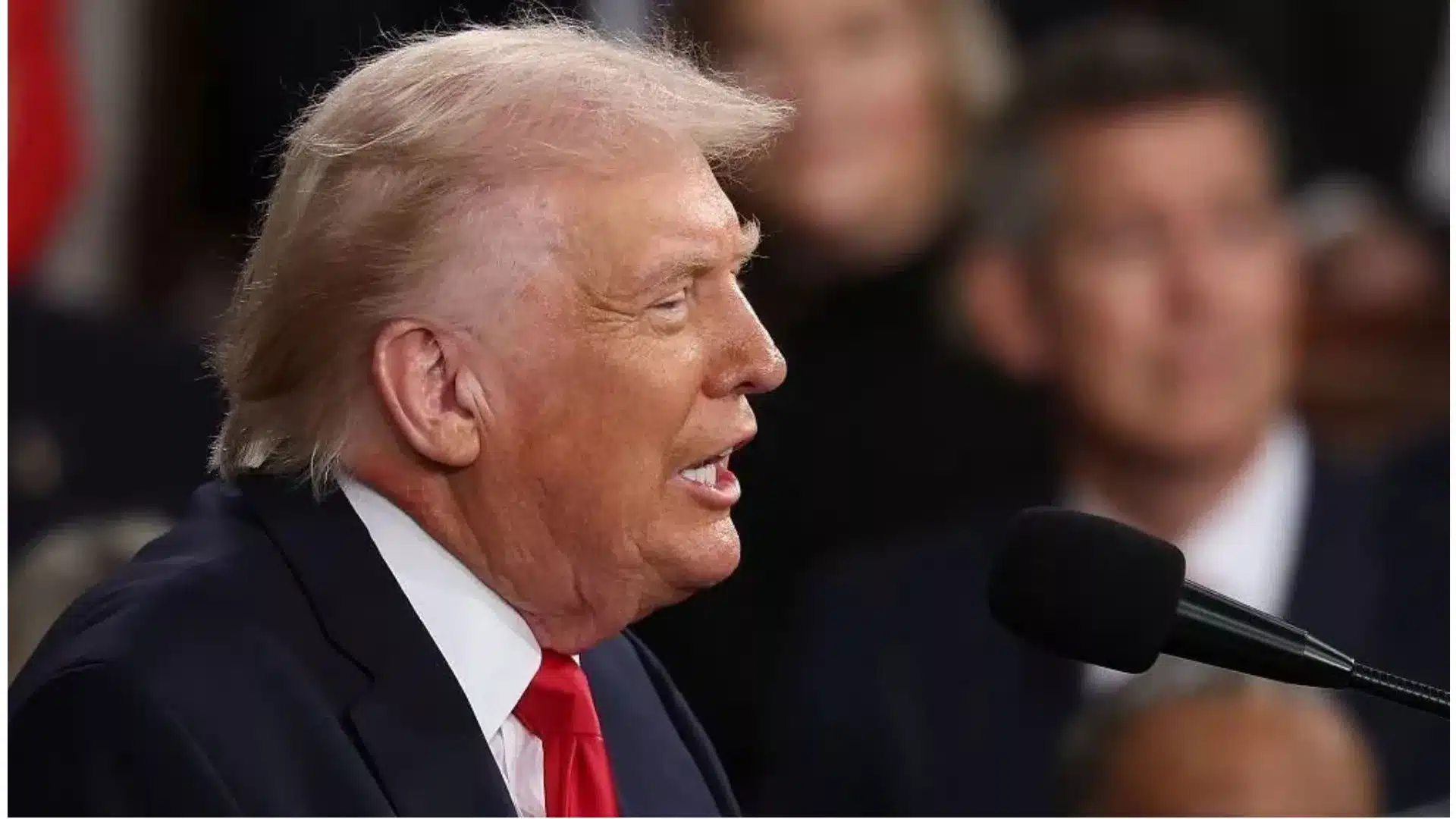
It was in this context that President Donald Trump announced, during his State of the Union address, a proposal aimed at expanding access to workplace retirement accounts. The initiative seeks to reach millions of workers who currently do not have any employer-sponsored plan while also creating a direct financial incentive to encourage saving: a federal matching contribution of up to $1,000 per year.
The proposal does not come out of nowhere. It builds on legal structures that already exist and on ideas that have been discussed for years by economists and lawmakers from different parties. Even so, the plan raises a series of important questions.
A persistent problem in the retirement system
It is estimated that tens of millions of American workers do not have access to an employer-provided retirement plan. This group mainly includes workers at small businesses, self-employed professionals, and lower-income individuals who often work in sectors where corporate benefits are rare.
Although these individuals can contribute to individual retirement accounts, such as IRAs, the reality is that the absence of an automatic contribution mechanism drastically reduces participation. Economists have long observed that programs tied directly to payroll significantly increase the likelihood of saving.
Without this structure, saving for retirement becomes a decision that needs to be made actively every month. For many workers who are already dealing with tight budgets, that decision is often postponed.
It was precisely this gap that Trump highlighted in his speech.
“Next year, my administration will give these often forgotten American workers — extraordinary people, the people who built our country — access to the same type of retirement plan offered to all federal employees,” the president said.
The reference made by Trump concerns the Thrift Savings Plan, the retirement plan offered to federal employees. This program is known for its extremely low administrative fees and for offering a simple selection of index funds.
A system inspired by the federal employees’ plan
The Thrift Savings Plan often appears in discussions about retirement reform in the United States because of its efficiency. Instead of offering a large variety of complex investments, the plan focuses on a small number of broadly diversified funds based on market indexes.
This reduces costs and makes decision-making easier for participants.
According to information released by the White House, the new system could use investment managers similar to those that already manage the federal employees’ plan. The proposal envisions that workers could open their accounts through an online service administered by the Treasury Department.
Employers could still encourage participation, for example during the hiring process, but they would not be responsible for administering the plans. This feature is considered central to the project.
Eliminating the employer from the equation
Traditionally, retirement plans depend on the active participation of companies. To offer a 401(k), for example, employers must deal with regulatory requirements, administrative costs, and fiduciary responsibility.
This creates a significant obstacle for small businesses.
The proposal discussed by the administration seeks to bypass this problem by eliminating the employer as a mandatory intermediary. Instead, any worker could enroll directly in the system.
According to Teresa Ghilarducci, a labor economist and advocate of universal retirement accounts, the model is based on a structure that the Treasury Department had already developed in previous administrations.
In theory, this could facilitate access for about 60 million workers who currently do not have access to employer-sponsored retirement plans.
“It’s something huge,” said Ghilarducci, co-author of the book Rescuing Retirement, which proposes a similar model of universal accounts.
The financial incentive of up to $1,000
While expanding access is important, specialists point out that many low-income workers face another problem: they simply do not have enough money to save.
To address this challenge, the proposal mentioned by Trump includes a federal matching contribution of up to $1,000 per year.
This type of incentive is known as a matching contribution. It works in a simple way: the government deposits additional money into the worker’s account based on the amount the worker saves.
In the case of the proposal currently being discussed, the calculation would follow a proportional logic. To receive the maximum match of $1,000, the worker would need to save $2,000 over the course of the year.
If the worker contributes less, the matching contribution would also be smaller.
This structure is already provided for in a law previously approved by Congress that created a new supplemental tax credit aimed at retirement savings.
A different tax credit
The new credit has an important characteristic: it will be refundable.
This means that the worker can receive the benefit even if they do not owe federal income tax. Instead of reducing the tax bill, the amount would be deposited directly into the retirement account.
This change seeks to make the incentive accessible to low-income workers, who often do not benefit from traditional tax deductions.
However, there are income limits.
Families with income above approximately $71,000 would not qualify for the full benefit. The idea is to direct the incentive primarily toward workers who have historically faced greater difficulty accumulating savings.
Another possible version of the plan
In addition to the structure already approved by law, lawmakers are also discussing a more ambitious proposal that has support from members of both parties.
This project would create a system with automatic contributions based on the worker’s salary. Under this model, about 1% of the salary would be automatically deposited into the retirement account, while the government would offer an additional match of up to 4%.
The incentive would also be paid through a refundable tax credit.
Eligibility would gradually decrease as income increases. The median household income in the United States is approximately $84,000, and the benefit would begin to decline for families with earnings near that level.
A predecessor that did not work
The idea of universal retirement accounts has been tested before.
In 2015, during the Obama administration, the Treasury Department launched a program called myRA (My Retirement Account). The initiative allowed workers without access to employer plans to deposit small amounts into retirement accounts administered by the government.
The program offered safe investments based on Treasury securities.
Despite good intentions, myRA had limited participation. The number of participants was relatively small, and administrative costs made the program difficult to sustain.
In 2017, the Trump administration decided to end the initiative.
The new proposal attempts to incorporate some lessons from that experiment. Instead of offering only Treasury securities, the new system could use index funds managed by professional managers, similar to those available in the Thrift Savings Plan.
The central challenge: low income
Even with financial incentives, saving for retirement remains a challenge for many workers.
Studies show that a large share of low-income families struggle to cover basic expenses such as housing, food, and transportation. In this context, setting aside money for retirement may seem like a distant luxury.
Matching contributions, however, can change that calculation.
Research in behavioral economics shows that people are much more likely to save when they receive some type of direct incentive. The logic is simple: each dollar saved generates an additional immediate return.
This mechanism has been widely used in corporate retirement plans.
The future of retirement in the United States
Over the past decades, the American retirement system has undergone a significant transformation. Traditional pension plans in which companies guaranteed lifetime income after retirement have become increasingly rare.
In their place, individual accounts such as 401(k)s emerged, in which the worker assumes much of the responsibility for their own savings. This means that access to simple savings tools has become even more important.
The proposal presented by Trump seeks precisely to fill a gap that has widened over the years: the absence of a universal system that allows any worker to save easily and with clear financial incentives.
If implemented effectively, the plan could significantly expand the number of Americans with retirement savings.
But, as happens with many economic reforms, the final impact will depend on details that are still under discussion, from income limits to how the system will be administered.
For now, the debate about the future of retirement in the United States remains open. And the proposal of a federal contribution of up to $1,000 may be only the first step in a broader reform of how American workers prepare for the future.