

Entering university is often described as the beginning of a journey of opportunities. For many young people and adults, it is the moment to build a career, achieve financial independence, and broaden personal horizons. However, a silent and increasingly common obstacle has been hindering this academic path: the unavailability of required courses.
This phenomenon, often called course exclusion, occurs when students are unable to enroll in essential classes for their education due to a lack of seats, limited course offerings, or scheduling conflicts. A recent report published by Instructure, an educational technology company, concluded that limitations in course availability “are not isolated incidents, but reflect a broader trend in how students navigate their academic paths.”
The report included a survey of more than 1,000 college students and recent graduates, which found that 85% of respondents reported some difficulty enrolling in a required course. About three-quarters said that limited seat availability increased the likelihood that they would need additional semesters to complete their degree.
“I was surprised by how widespread it was,” said Brian Cully, senior vice president of corporate development at Instructure. The survey was conducted online in August and September using SurveyMonkey Audience and included students from across the country.
The most immediate impact is the delay in completing the degree. In a scenario of rising tuition costs and doubts about the financial return of a college degree, each additional semester can represent thousands of dollars in extra costs, in addition to the loss of income that the student could have earned by entering the job market earlier.
“This makes it harder for students to graduate on time,” said Ivette House, deputy director of programs at 10,000 Degrees, a nonprofit organization in San Rafael, California, that helps low-income and first-generation students attend college. “The longer you take to finish college, the more money you pay.”
An invisible obstacle in the academic journey
Imagine a student who carefully planned their university path. They enrolled in a recognized institution, chose a promising field, and structured their course schedule with the goal of graduating within the traditional four-year period. However, when trying to enroll in required courses, they discover that all the seats were filled within minutes.
This scenario is more common than many imagine. Although a traditional bachelor’s degree is designed to be completed in four years (two years for an associate degree), many students take longer. About 61% of students seeking a degree or certificate after high school complete their studies within six years, according to the National Student Clearinghouse Research Center.
Taking extra years to complete college increases costs not only because students pay more out of pocket, but also due to the loss of wages they could have earned if they had graduated on time, according to research from the Federal Reserve Bank of New York.
“It was found that taking one or two extra years to complete studies significantly increases the cost, largely due to higher opportunity costs,” they wrote.
The real cost of a longer degree
Extending the time to graduate has significant financial implications. In the United States, the average published price, or “sticker price,” for tuition, fees, housing, and meals at a public four-year university for in-state residents is about $26,000 per year. For a public two-year college, the amount is $15,000, and for a private nonprofit university, it reaches $45,000. Staying for an additional semester can add thousands of dollars to the cost.
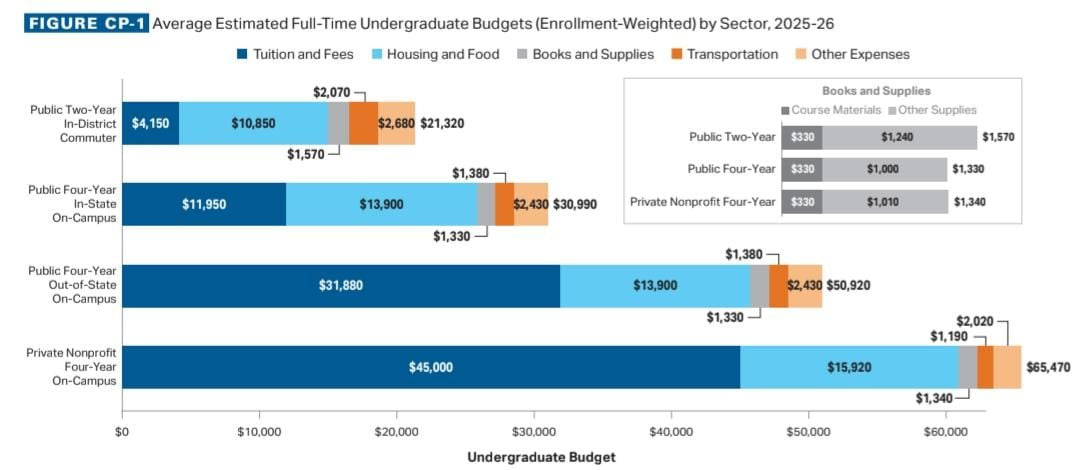
When a student needs to remain in college for an additional semester or year, the impact is not limited to directly paying these expenses. There is also the so-called opportunity cost: the salary that could have been earned if the degree had been completed on time.
Economic studies show that delays in graduation can result in substantial losses over a lifetime. This is because late entry into the job market reduces the time available to accumulate experience, progress in a career, and invest in financial assets.
At a time when the value of a college degree is increasingly questioned, the difficulty of completing a program within the expected timeframe becomes a central concern for students, families, and policymakers.
Why are there not enough seats in courses?
Several factors contribute to the shortage of seats in required courses. One of the main ones is the budget pressure faced by public higher education institutions. With limited resources, many universities reduce the number of course sections offered or delay hiring professors.
Demographic changes also play an important role. The profile of college students has diversified in recent decades. More and more people are balancing studies with full-time work or family responsibilities, which requires greater flexibility in scheduling.
“A class schedule from 9 a.m. to 5 p.m. may not be enough for them,” said Bill DeBaun, senior director of data and strategic initiatives at the National College Attainment Network, a nonprofit organization that promotes access to higher education.
However, many institutions still operate with academic models designed for young, full-time students. As a result, courses offered only during business hours may exclude a significant portion of the student population.
In addition, highly competitive programs — such as nursing, technology, and health fields — often face structural limitations, including laboratories, equipment, and required internships. This reduces the ability to quickly expand the number of available seats.
Academic and psychological consequences
The unavailability of courses does not only affect the academic schedule. It can also influence student motivation and engagement. Research shows that limited course availability can have broader negative effects. A 2025 study conducted by researchers at Purdue University and Brigham Young University found that when students at a large university were unable to enroll in the courses they requested, the likelihood of a student taking any course in that field decreased by 30%. Earlier research in community colleges revealed that students placed on waitlists were up to 28% more likely not to take any course that semester.
In addition, the frustration resulting from a lack of institutional planning can generate anxiety and a sense of loss of control over one’s academic future. For low-income or first-generation college students, these obstacles can be even more challenging, as fewer resources are available to deal with unexpected delays.
The strategy of taking courses at other institutions
Faced with a lack of available seats, many students seek alternatives outside their home institutions. Online or in-person courses at partner institutions can help fulfill curriculum requirements and avoid delays in graduation.
However, this solution is not always simple. The transfer of credits between institutions can be bureaucratic and uncertain. In many cases, courses taken externally are not fully recognized, forcing the student to repeat content or extend their time in school even further.
Even when transfer is possible, enrolling in external courses may involve additional costs, commuting, or technological difficulties. Still, this practice has become increasingly common as a way to work around gaps in academic offerings.
Differences between institutions and programs
Not all universities face the problem with the same intensity. Well-funded private institutions tend to offer a greater variety of courses and smaller class sizes, which makes academic planning easier for students.
Public universities, especially in states with budget constraints, may have more difficulty keeping up with growing demand for certain programs.
In addition, so-called impacted programs — those with more applicants than available capacity — require strategic planning on the part of students. Choosing an institution or program without considering the actual availability of courses can result in significant delays.
The State University of New York system, for example, offers the ASAP program for eligible students, helping them stay on track through benefits such as personal advising and priority course registration. Similarly, some institutions may have honors programs that offer priority registration as a benefit.
The role of academic advising
Another factor that worsens the problem is limited access to academic advisors. These professionals play a fundamental role in organizing the curriculum and selecting appropriate courses.
When advising services are insufficient or delayed, students may miss important registration deadlines or fail to fully understand the prerequisites required for certain classes.
Scheduling appointments in advance and closely monitoring registration periods can increase the chances of securing a spot in desired courses. In some institutions, upper-level students or participants in special programs receive priority registration, which can represent a strategic advantage.
How to evaluate a university before enrolling
For prospective students, investigating course availability should be part of the university selection process. Talking to current students, participating in campus visits, and analyzing official data on graduation rates are effective ways to obtain relevant information.
In addition, students can consult data on graduation rates — an indirect indicator of course availability — using the College Scorecard tool, as well as the government’s College Navigator, to check the proportion of students who complete a program within a certain number of years after enrollment. The higher the percentage, the better.
The Cal State system has a database that students can use to check which programs or schools have limited capacity.
A systemic challenge in higher education
The shortage of seats in required courses reveals structural challenges in the higher education system. As demand for college education grows and institutional resources remain limited, it will be necessary to rethink academic planning models.
Partnerships between universities, expansion of hybrid education, and the use of educational technology may help expand access to courses. However, lasting solutions require investment, effective public policies, and greater transparency about the real conditions of academic progress.
For students, understanding this scenario is essential to making informed decisions and avoiding surprises throughout the academic journey.
Completing a college degree remains one of the most effective ways to improve professional and financial prospects. But in an increasingly complex system, academic success depends not only on dedication and talent, but also on the ability to navigate institutional challenges that often remain invisible until they become concrete obstacles.